Beretta 92 Police Trade-In Guide
The Beretta 92 is the pistol many Americans picture when they think of a 1990s police or military handgun. It served as the U.S. military's M9 for decades and was carried by police departments across the country. Agencies have been trading them in for years. The used 92s you see today come in several letter variants that look almost the same but work differently. Getting the letters right is the first step to buying the one you want.
The basic design
All 92-family pistols share the same layout. An aluminum alloy frame. An open-top steel slide that exposes most of the barrel. A locking block under the barrel that tilts to unlock, rather than the tilting barrel used in most modern pistols. A double-stack magazine that holds 15 rounds of 9mm in standard form. The open slide makes ejection reliable. The locking block keeps the barrel moving in a straight line, which many shooters credit for the 92's accuracy.
A short timeline
- 1975 to 1976: Beretta designs the original 92 and starts production in Italy.
- Late 1970s: the 92S moves the safety to the slide, where it also works as a decocker, and Italian police and military units adopt it.
- Early 1980s: the 92SB adds an ambidextrous safety, a firing pin block and a magazine release behind the trigger guard.
- 1984 to 1985: the 92F, with a squared trigger guard and a chrome-lined bore, is developed for U.S. military testing. The U.S. armed forces adopt the 92 family as the M9 in 1985.
- Late 1980s: the 92FS adds an enlarged hammer pin that catches a groove in the slide. The change answered reports of slide failures in military testing, so that a cracked slide cannot fly off the frame.
The letters that matter for trade-ins
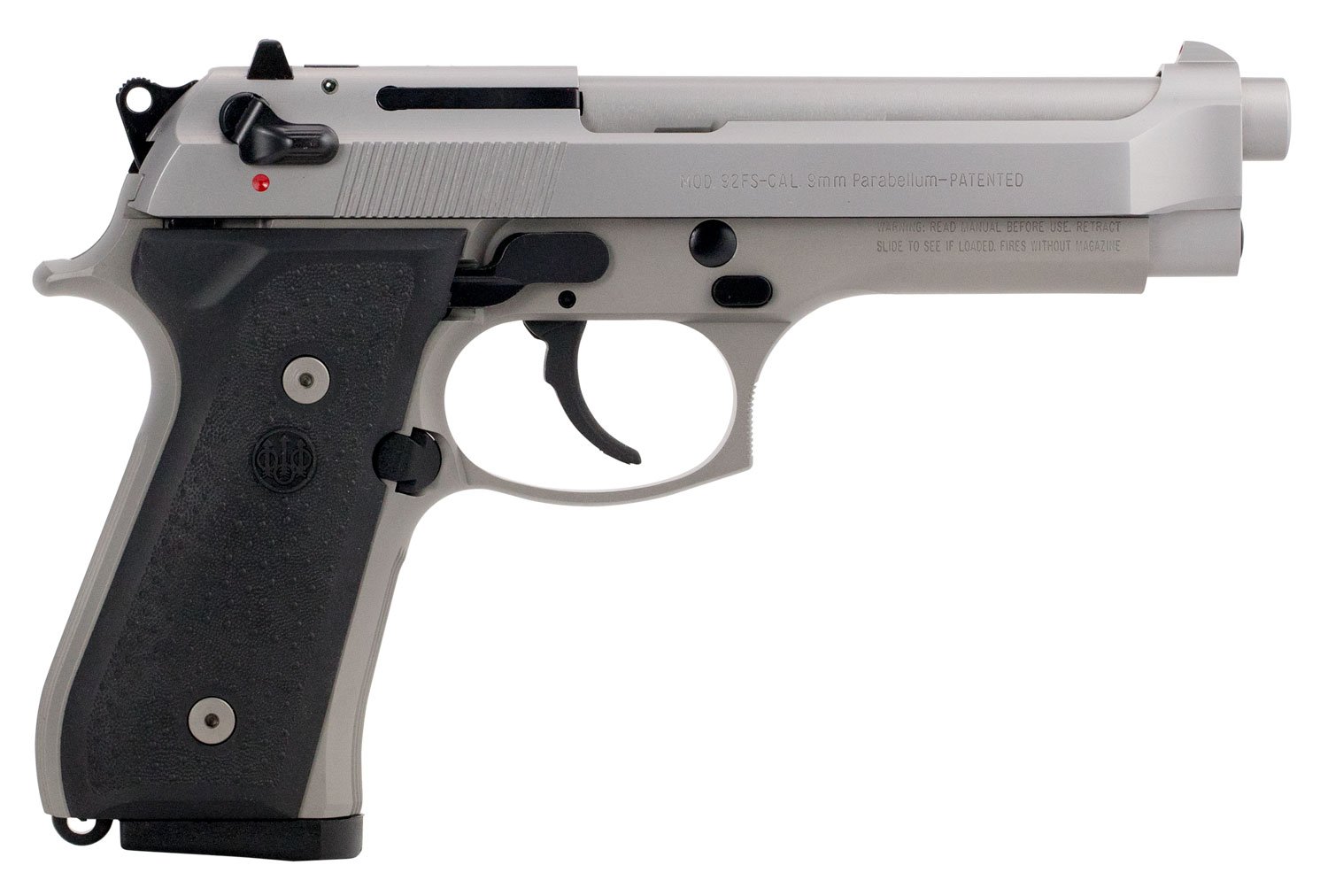
92FS
The standard DA/SA model. A slide-mounted lever works as both safety and decocker. Push it down and the hammer drops, the trigger disconnects and the gun is on safe. Push it up to fire. Most civilian and many police 92s are 92FS.
92D
Double-action only. No lever at all. The hammer is bobbed, with no spur to cock, and every shot has the same long pull. Some departments chose the 92D for simplicity. References say it was discontinued by the late 1990s.
92G
Decock-only. The slide lever drops the hammer and then springs back up to the fire position. There is no manual safety. Beretta made the original 92G for the French Gendarmerie. Many U.S. agencies preferred it too, because the officer cannot leave the gun on safe by mistake. The standard 92G model was discontinued in the mid-2000s, but G-style decockers live on in later Beretta models. Some owners convert 92FS pistols to G-style with a factory or aftermarket kit, so check how the lever behaves rather than trusting the roll mark alone.
96
The .40 S&W version of the 92, introduced in the early 1990s when .40 caught on with police. It looks almost identical but uses its own magazines, which hold fewer rounds than the 9mm. 96 trade-ins come in F, D and G variants just like the 92. A 96D is DAO .40. A 96G is decock-only .40.
Vertec and later models
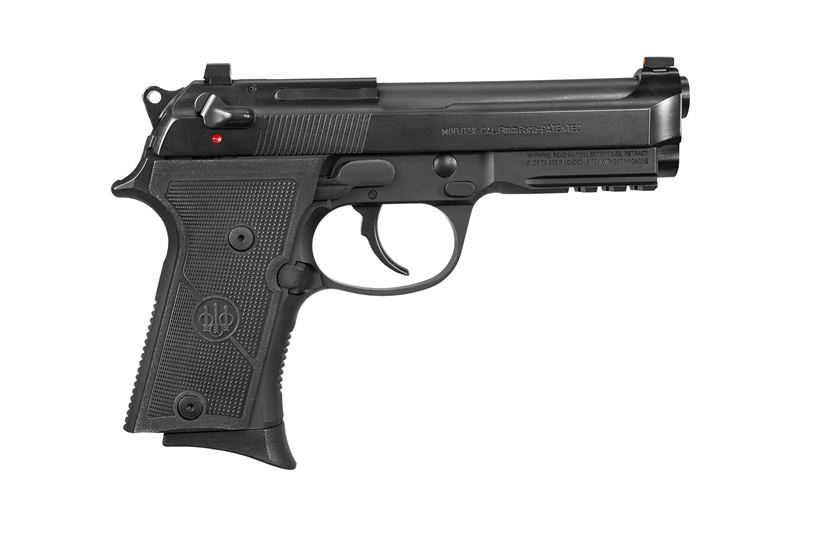
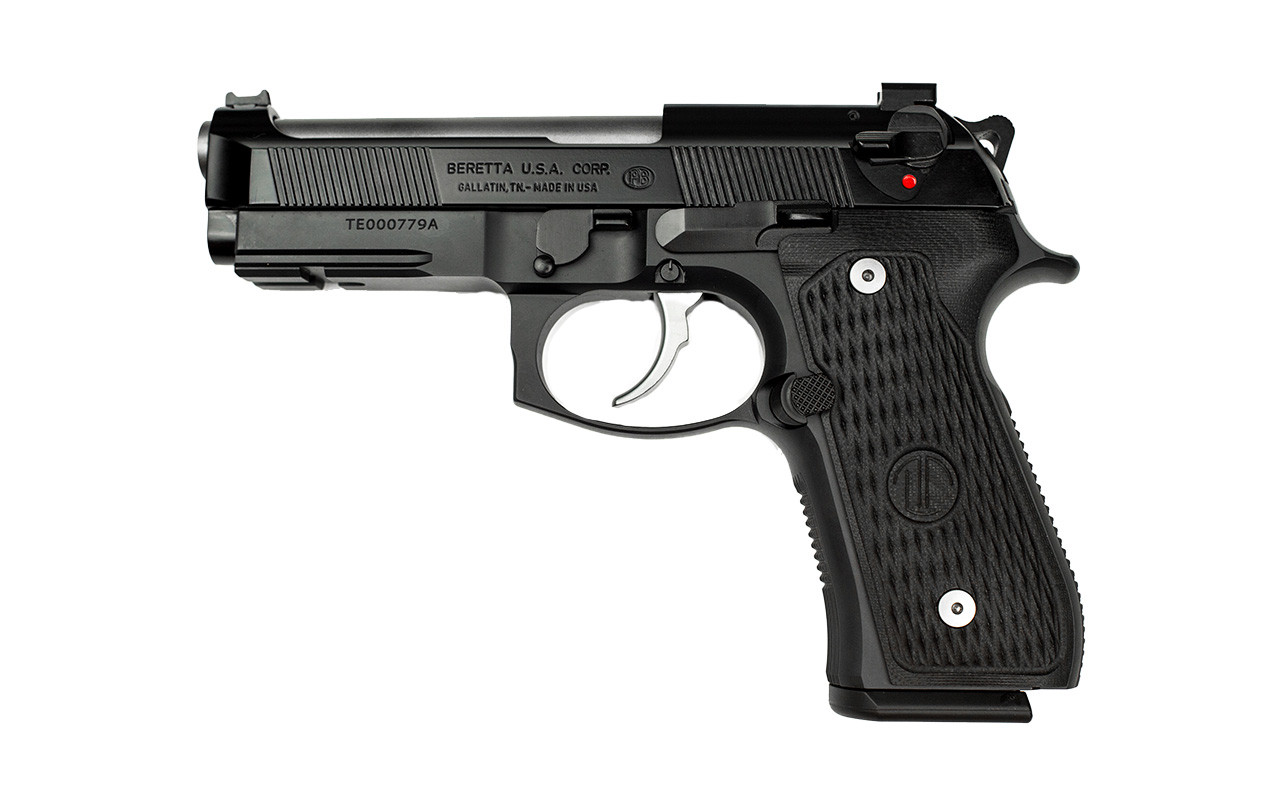
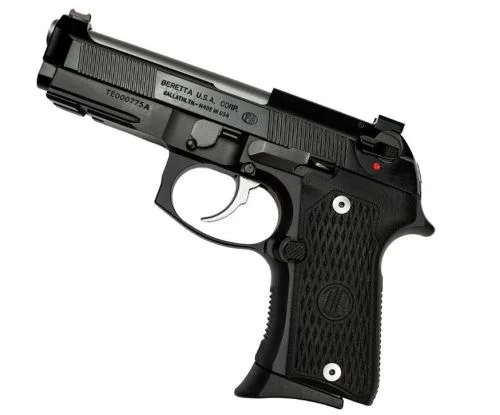
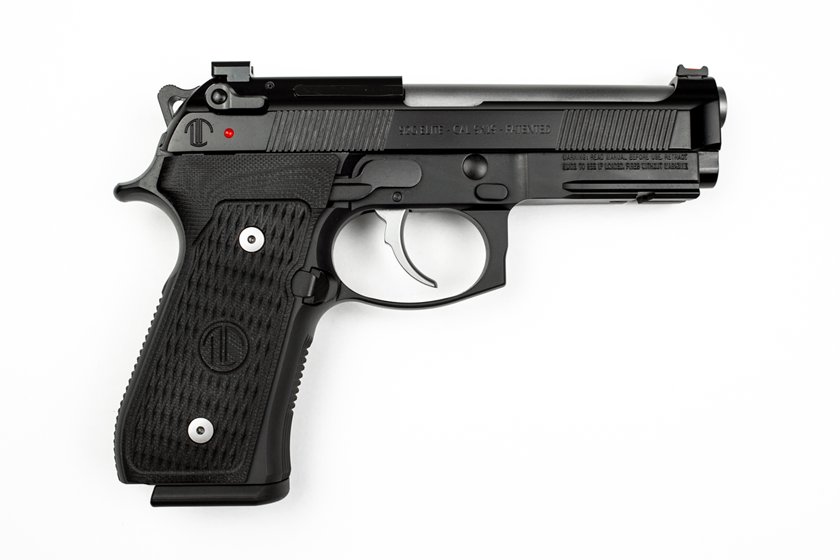
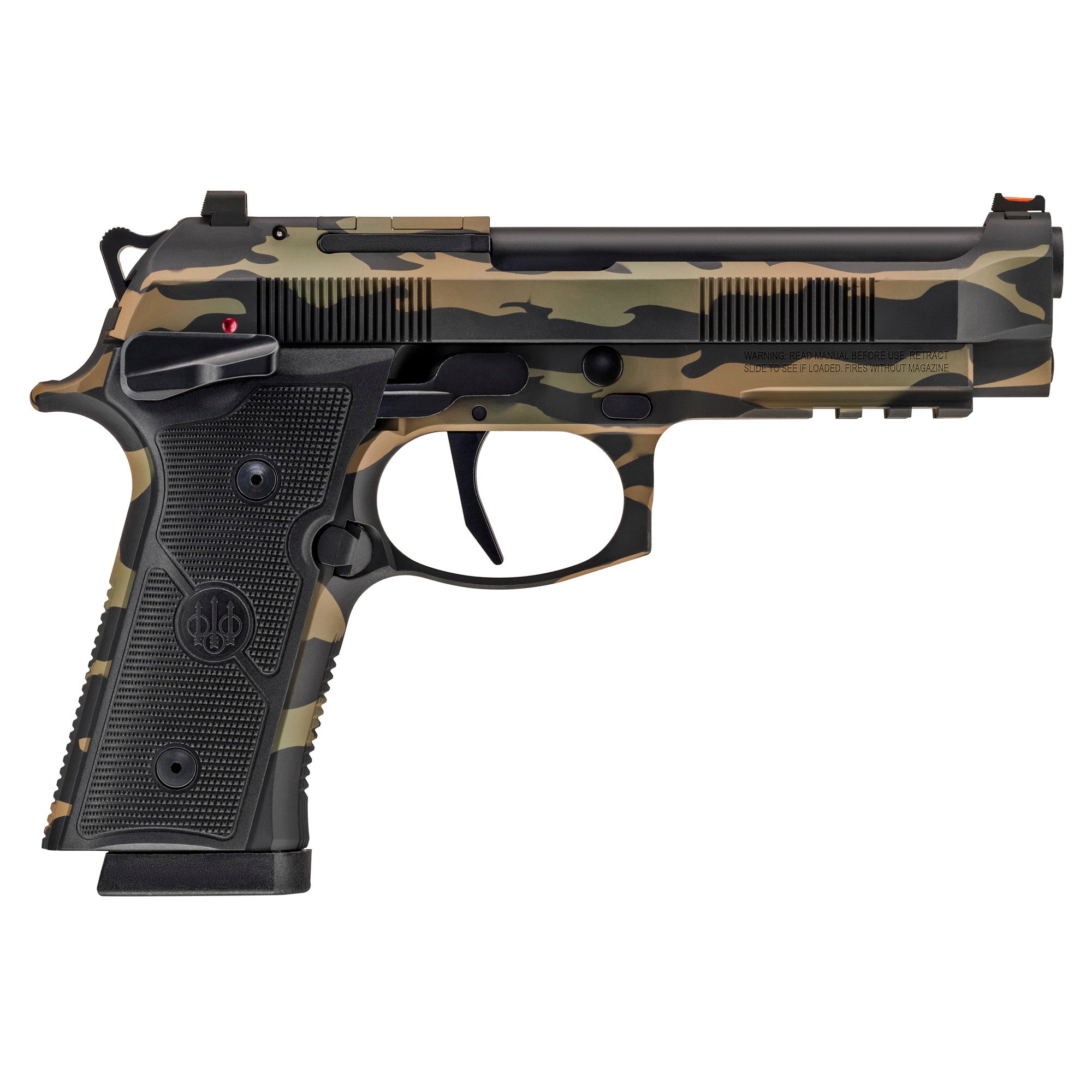
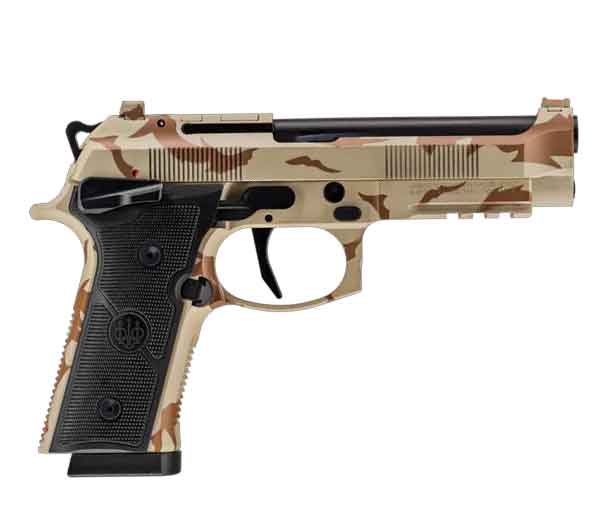
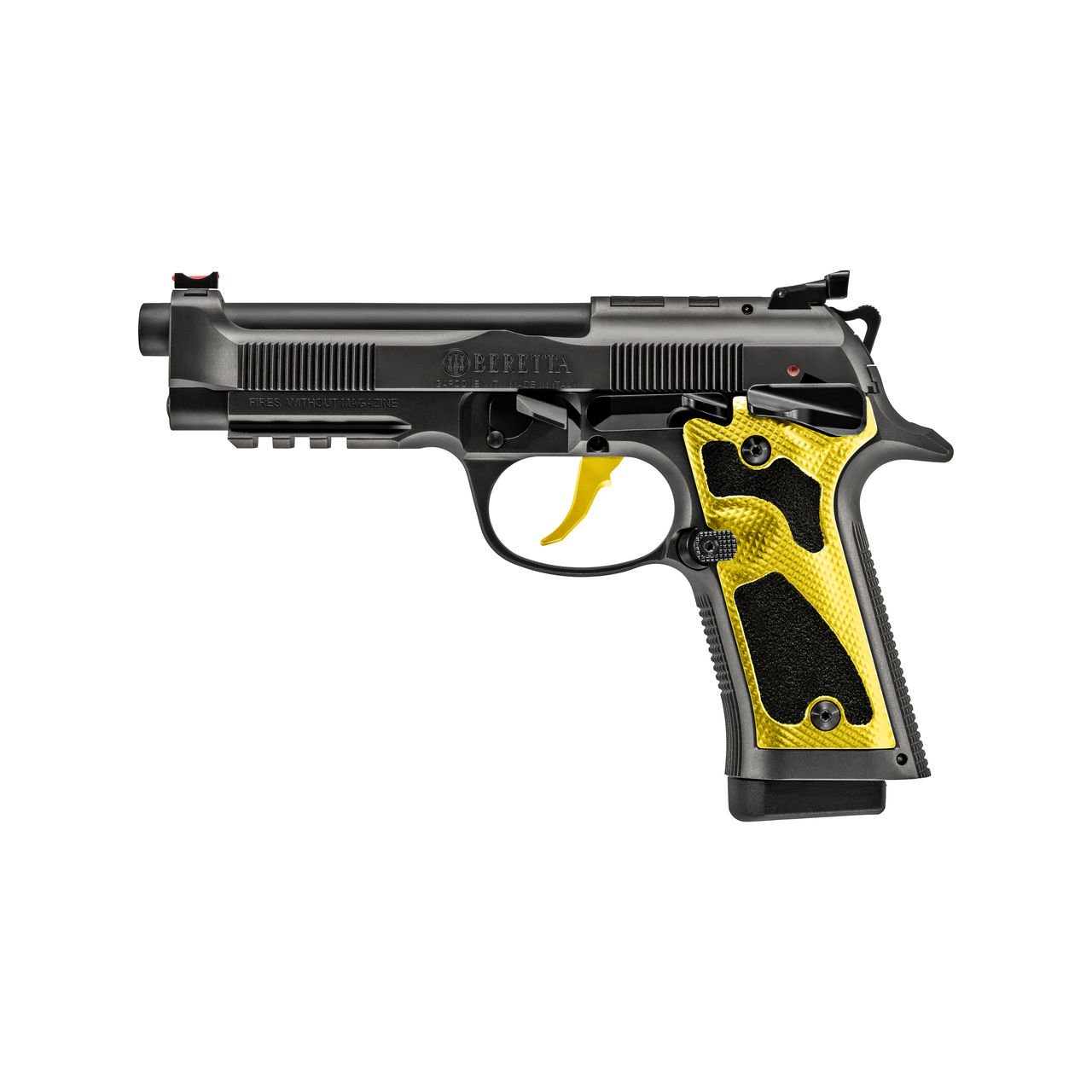
The 92 Vertec has a straight backstrap and a railed frame. Later M9A1, M9A3 and 92X models add rails and other changes. These show up less often as police trade-ins but use similar parts.
How the M9 relates
The military M9 is a 92FS made to military specification, with its own markings. Military M9s are U.S. government property and are not generally sold as surplus to the public. The "M9" pistols on the civilian market are almost always Beretta commercial models marked M9. A police trade-in 92FS is not an M9, though the two share most parts.
About Italian surplus
Italian police and military surplus Berettas appear in the U.S. from time to time. Know what you are looking at.
- Beretta 92S: Italian police and military units did carry the 92S. It has the older slide safety and the magazine release at the bottom of the grip, not behind the trigger guard. Magazines for the 92FS may not lock into a 92S, and older 92S magazines may not work in a 92FS.
- Beretta M1951: a different pistol. It is a single-action, 9mm pistol with an 8-round single-column magazine. It was carried by the Italian Navy, the Carabinieri and other services before the 92 replaced it. It is not a 92 variant, and parts and magazines do not interchange.
What to check on a used 92
Locking block
The locking block is the most talked-about wear part on the 92. Remove the barrel and look at the block under it. Check the two locking lugs and the thin arms for cracks. Beretta has revised the locking block design over the years. A cracked block is a known issue on very high round counts. Replacement blocks are sold and fitting is simple for an armorer, but a crack means the gun should not be fired until it is replaced.
Slide
Look at the slide around the locking recesses and the ejection port for cracks. Holster wear on the slide edges and muzzle is normal and shows as silver edges through the black finish. Check the decocker lever for cracks and smooth movement.
Lever function
Unloaded, cock the hammer and push the lever down. On an F model, the hammer should drop and the lever should stay down until you push it up. On a G model, the hammer should drop and the lever should spring back up. On a D model, there is no lever to test. Check the trigger return.
Frame
The alloy frame shows wear on the rails. Light wear is normal. Look at the front of the frame where the slide meets it for any cracking.
Springs
Recoil springs, the trigger bar spring and magazine springs wear. Replace them on any gun that saw duty use.
For a full walk-through of reading wear and markings, see our condition guide.
Magazines and holsters
92FS, 92D and 92G magazines are the same, and so are the matching M9 magazines. Standard capacity is 15 rounds. Beretta also makes 10-round magazines for restricted states. The 96 uses its own .40 magazines. Holsters fit most 92 and 96 pistols, except railed models, which need rail-cut holsters. If your state limits capacity, read our state law guide.
What drives the price
We don't quote prices as fact; check current listings. The main factors are condition, model letter and extras. 92G and 92D trade-ins are sometimes priced below 92FS guns because more buyers want a manual safety. 96 trade-ins often sell for less than 9mm guns. Night sights, three magazines and a clean finish add value. A cracked locking block or slide takes a gun off the list.
Shop and learn more
- Search stock: Beretta 92, 92FS, 92G, Beretta 96
- Browse all Beretta listings and police trade-ins
- Read how to judge trade-in condition and buying a used handgun online by state
- Every pistol ships to your chosen FFL dealer. See shipping and returns. We label a listing only with the condition its source states.
General information, not legal advice. Current as of October 2026. Laws change; check the official source before you act.