SIG Sauer P226 and P229 Trade-In Guide
The SIG Sauer P226 and P229 have been carried by federal agents, state troopers, city police and military units for decades. When agencies replace them, a steady stream of used SIGs reaches the market. They are metal-framed, hammer-fired pistols with a strong record. They are also built in many versions, which makes the listings confusing. This guide is set up as the questions buyers ask most, in roughly the order they ask them.
What is the difference between a P226 and a P229?
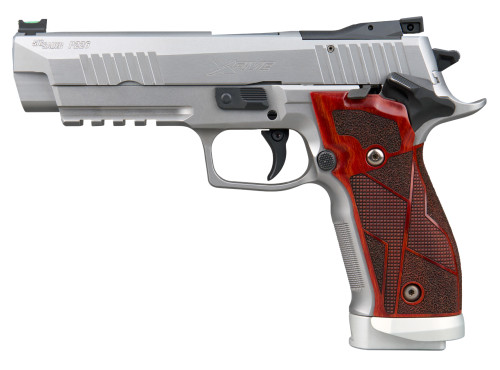
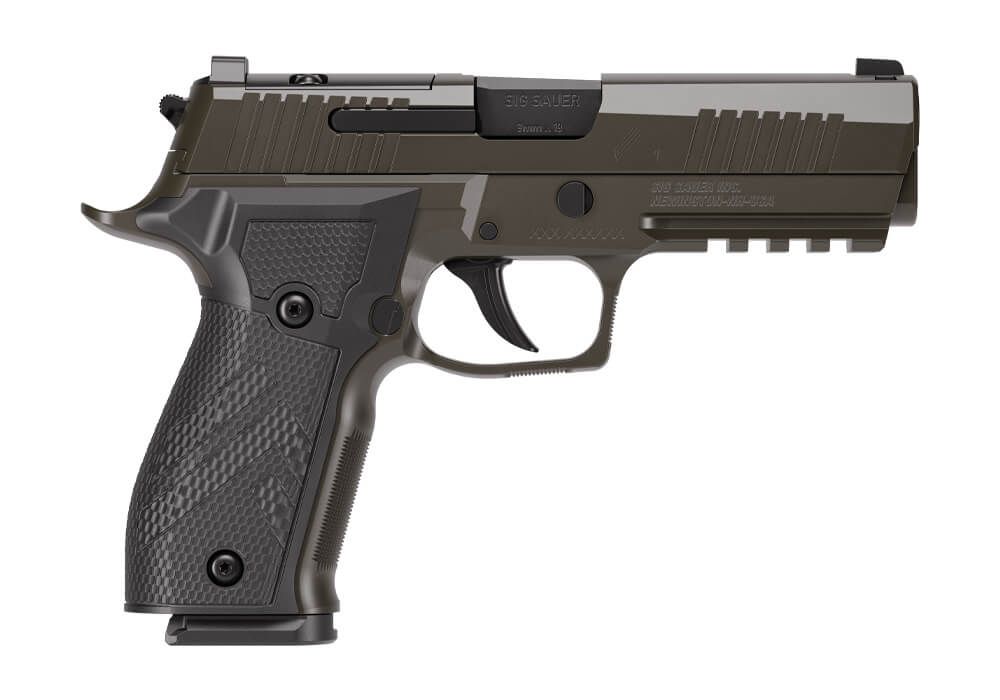
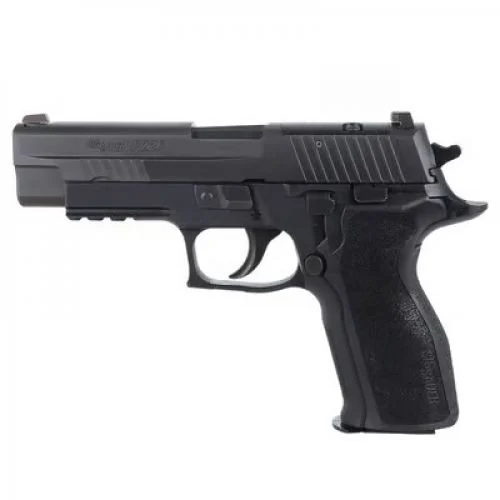
The P226 is the full-size pistol. SIG designed it for the U.S. military's XM9 service pistol trials in the early 1980s. It finished the trials alongside the Beretta 92F, which won the contract. The P226 went on to wide police and military use anyway. U.S. Navy SEAL teams adopted it in 1989.
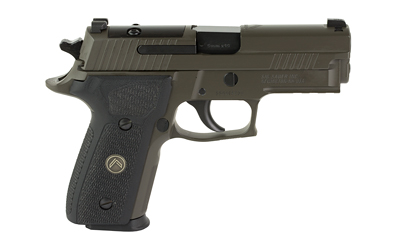
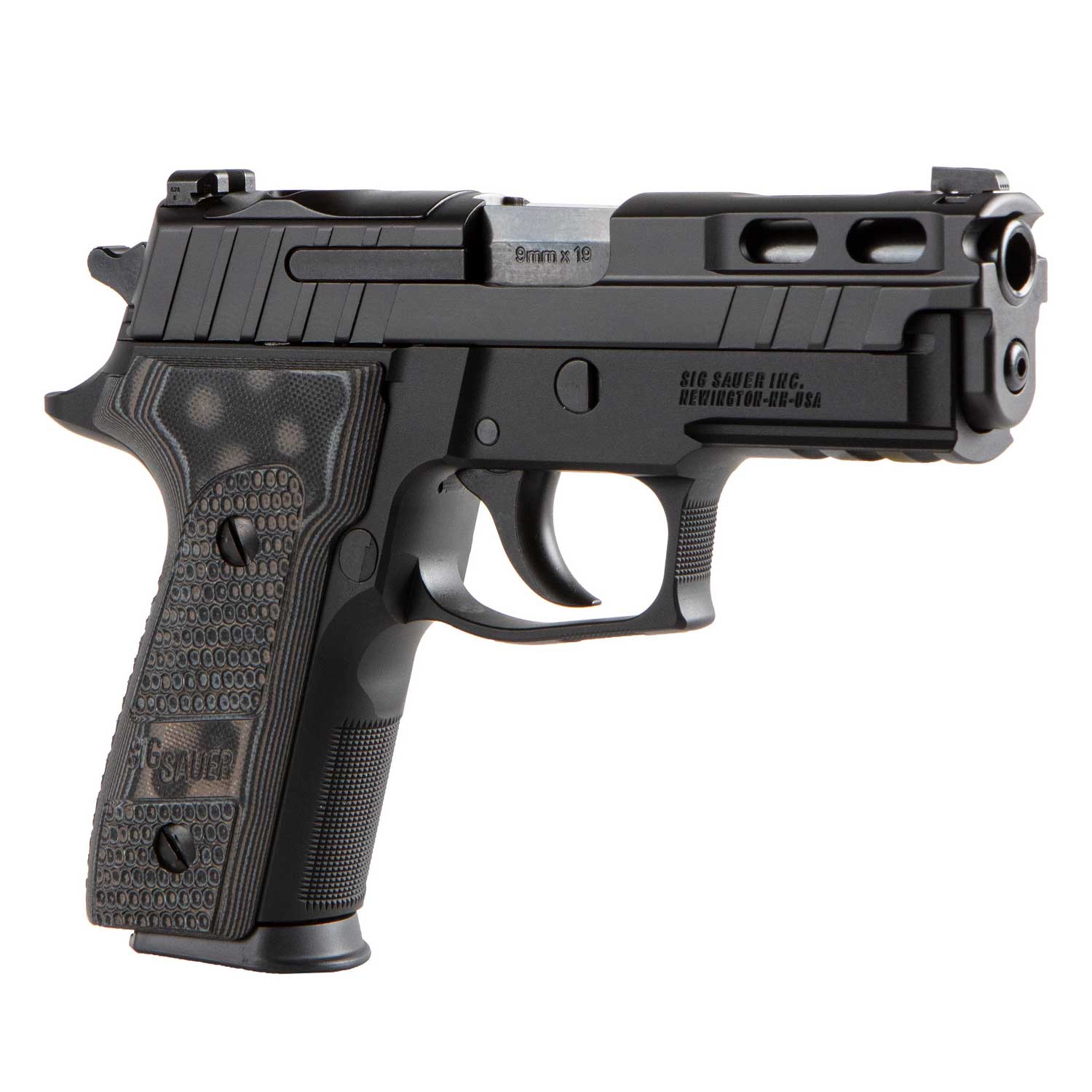
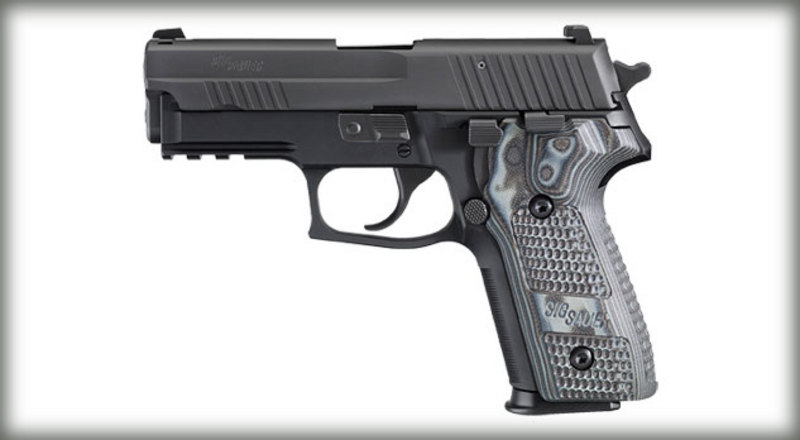
The P229 is the compact. It grew out of the 9mm P228 and arrived in the early 1990s. References differ on whether it was 1991 or 1992. Its key feature is a slide machined from stainless steel instead of the folded steel slide of the early P226 and P228. That stronger slide suited the then-new .40 S&W and .357 SIG cartridges. The P229 was the first pistol SIG built in New Hampshire.
Both have aluminum alloy frames, a decocking lever on the left side and a takedown lever above the trigger.
What do the calibers mean for a trade-in?
- 9mm: P226 standard magazines hold 15 rounds, with higher-capacity versions available for later guns. P229 9mm magazines commonly hold 13 or 15.
- .40 S&W: 12-round magazines in both models. A very common police caliber, which is why many trade-ins are .40.
- .357 SIG: uses the same magazines as .40 S&W in these pistols. Several state and federal agencies carried it. It is louder and has more recoil, and ammunition costs more.
Many shooters fit a .357 SIG barrel to a .40 pistol, or the reverse, since the magazines are shared. Ask a SIG armorer or SIG itself before you do this on a particular gun.
German or New Hampshire: does it matter?
Early pistols were made in Germany and imported. Their slides are marked "Made in W. Germany" if they were made before German reunification, and "Germany" after. Later production moved to New Hampshire, with markings for Exeter and, later, Newington. Some pistols mix German and U.S. parts during the changeover years, and the markings show this.
Function is similar. Collectors often pay more for West German guns and early German P226s with folded steel slides. Many shooters care more about condition than country. Read the markings in the photos, not just the title.
Rail or no rail?
Older P226 and P229 pistols have a plain dust cover. Later guns, often called P226R or P229R, have an accessory rail for a weapon light. Most police trade-ins from the 2000s onward are railed, since agencies wanted lights. A railed gun needs a holster cut for the rail. A non-railed gun needs a non-rail holster. Holsters for one often do not fit the other.
DA/SA, DAK or DAO?
- DA/SA: the classic SIG system. Long double-action first shot, short single-action shots after, decocker to drop the hammer. Most common.
- DAK (Double Action Kellerman): a double-action-only trigger with a lighter pull than older DAO designs and two reset points. No decocker. Some agencies chose it for a consistent pull on every shot.
- DAO: older double-action-only versions. Every shot is a long pull. The New York City Police Department carried a DAO P226 for a time.
Look at the left side of the frame. A DA/SA gun has a decocking lever. DAK and DAO guns do not.
What are the M11-A1, MK25 and Legion?
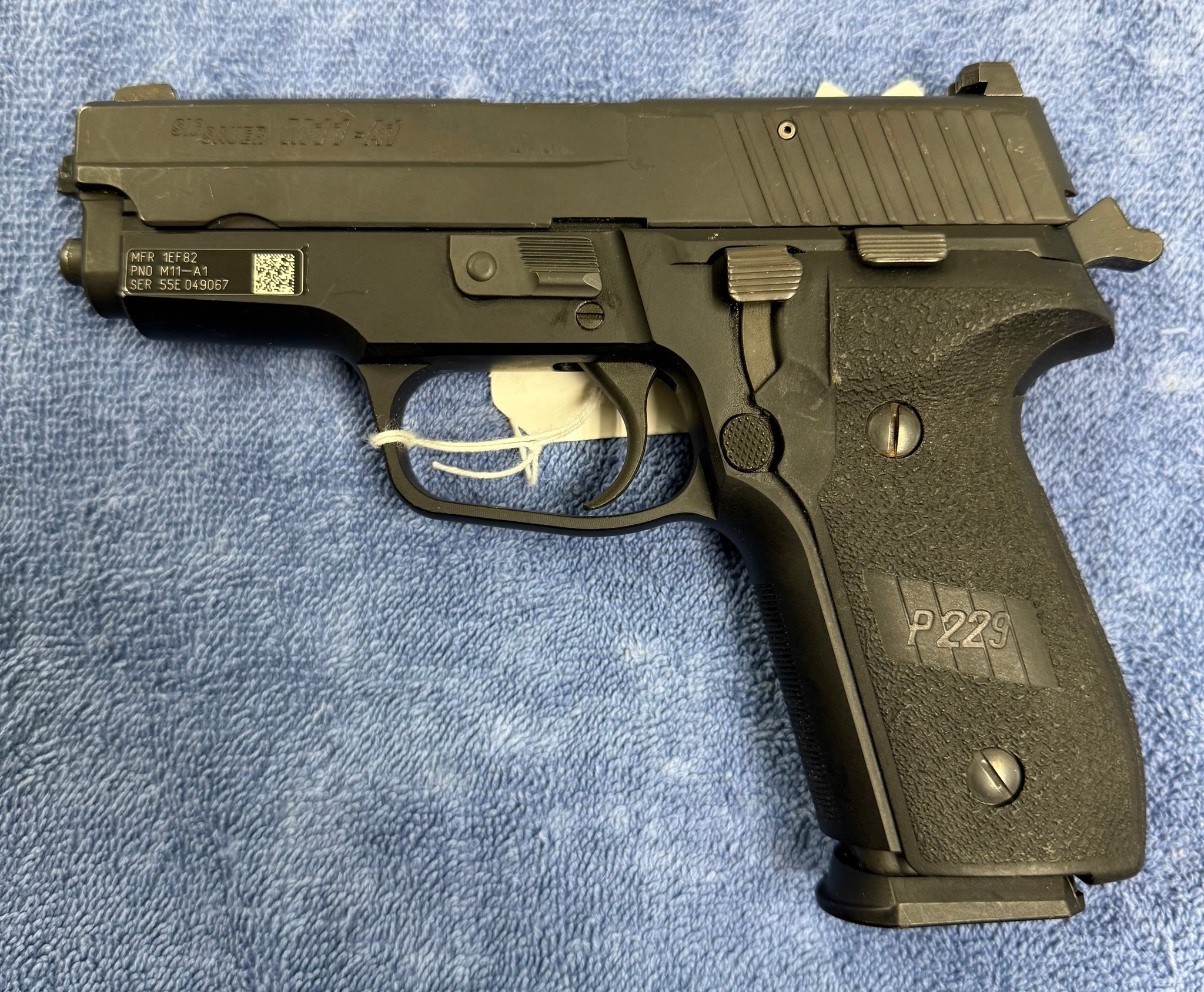
- M11-A1: a commercial 9mm pistol announced in 2012. It is essentially a P229 with a machined slide, short-reset trigger, SIGLITE night sights and 15-round magazines, styled after the military M11.
- MK25: the commercial version of the P226 used by Navy SEAL teams. It has a rail, a silver anchor marking and a UID label on the frame, plus a corrosion-resistant finish.
- Legion: a premium line with upgraded triggers, grips, sights and a gray finish. These are mostly civilian guns, not issued pistols.
Police trade-ins are usually standard models, not these. A listing for an "M11-A1 trade-in" or "MK25 trade-in" is worth a careful look at the markings.
What should I check before I buy?
Decocker
Unloaded, cock the hammer and press the decocker. The hammer should drop smoothly to its rest position and stop there, without striking the firing pin hard. It should do this every time.
Takedown lever and slide catch
The takedown lever should rotate firmly and stay in place. The slide catch should hold the slide open on an empty magazine and release cleanly.
Frame and slide
The alloy frame shows wear on the rails, where the slide rides. Some bare aluminum there is normal. Look over the whole frame and slide for cracks. We don't single out one spot here, because damage varies, but any crack in either part is a reason to pass. Look at the finish for wear versus corrosion. Holster wear on the slide edges and muzzle is cosmetic.
Barrel and bore
Check the bore, the feed ramp and the crown. Look at the barrel hood for heavy peening.
Springs and grips
Recoil and hammer springs wear. Many SIG owners replace springs on a schedule. Check grips for cracks. Older two-piece grips and the one-piece E2-style wraparound grip are different parts.
Night sights
Many trade-ins have SIGLITE or other tritium sights. Tritium has a half-life of about 12.3 years, so older sights glow much less than new ones.
See our condition guide for more on wear and markings.
Which magazines fit?
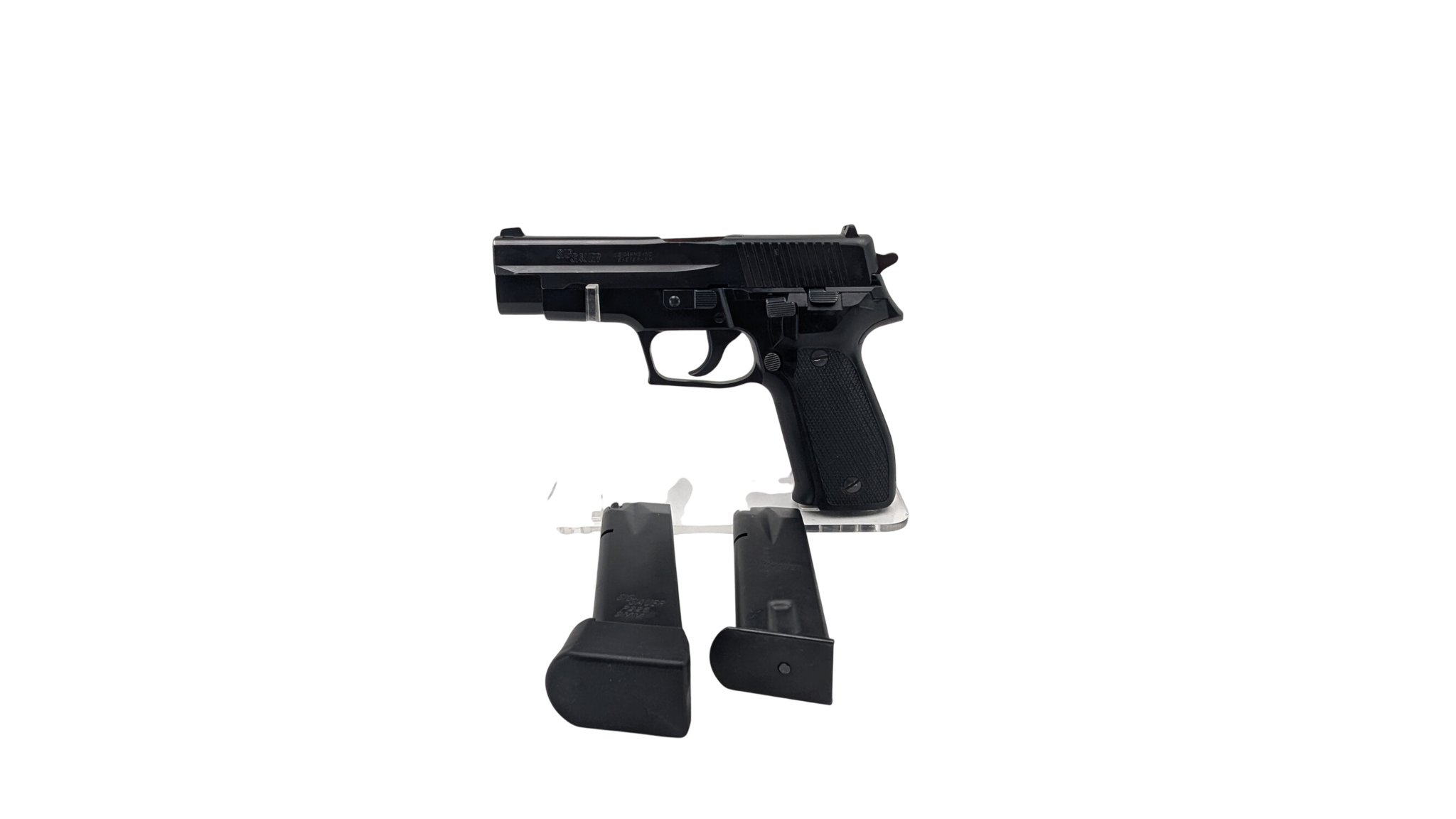
P226 magazines are longer than P229 magazines. A P226 9mm magazine will usually fit a 9mm P228 or P229 and stick out below the grip. A shorter P229 magazine is not made to lock into a P226. The .40 and .357 SIG magazines are a separate family from 9mm. Agencies typically issued three magazines. Trade-ins often come with two or fewer. If your state limits capacity, check our state law guide first.
What drives the price?
We don't list a single price; check current listings. Country of manufacture, condition, caliber and extras all matter. West German guns, M11-A1 and MK25 models often draw more. .40 S&W and .357 SIG trade-ins often cost less than 9mm guns in the same shape. Working night sights, extra factory magazines, a box and clean finish raise value. Cracks, corrosion or a worn-out bore are deal breakers, not price factors.
Next steps
- Search stock: P226, P229, M11-A1
- Browse all SIG Sauer listings and handguns
- Read how to judge trade-in condition and buying a used handgun online by state
- Pistols ship to your FFL dealer for the Form 4473 and background check. See shipping and returns. We label each listing only with the condition its source states.
General information, not legal advice. Current as of October 2026. Laws change; check the official source before you act.